
Tel: 020 7620 1818 email: cookandbutler@btconnect.com
The Worshipful Company of Pattenmakers
Master's weekend
12Th November 2024, Armourers' Hall, London
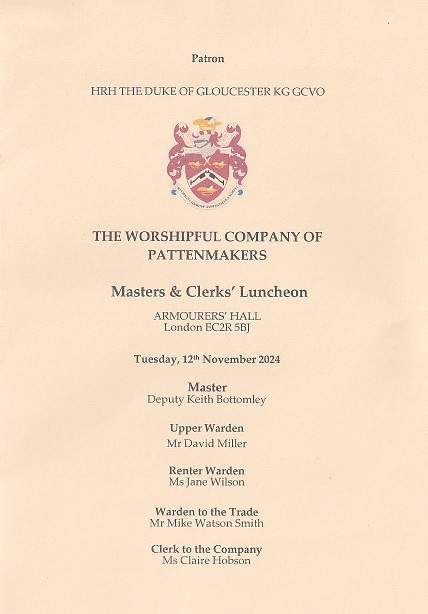
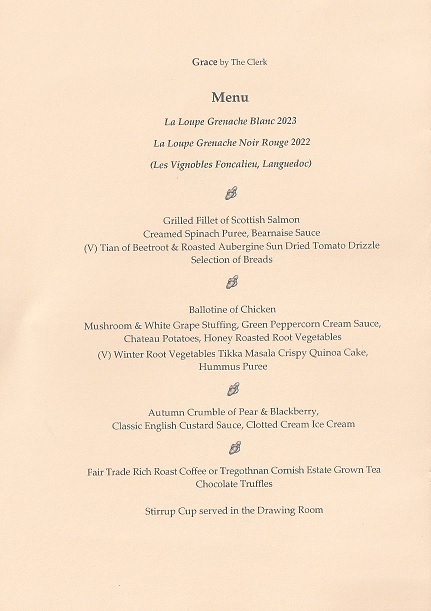
Master's weekend
11Th May 2024, Guildhall, London

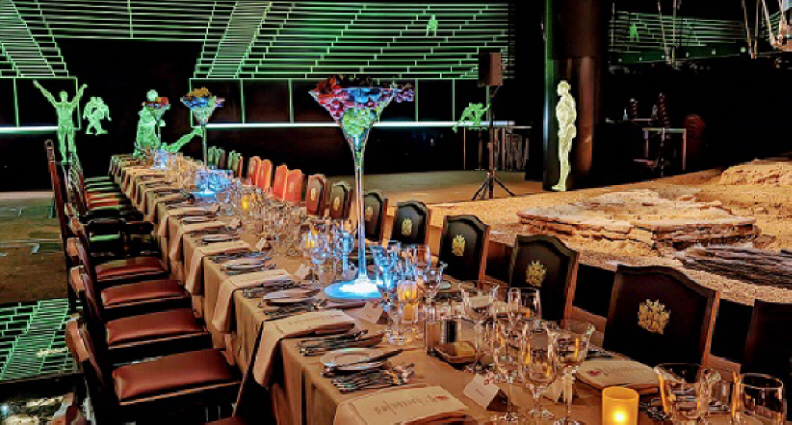
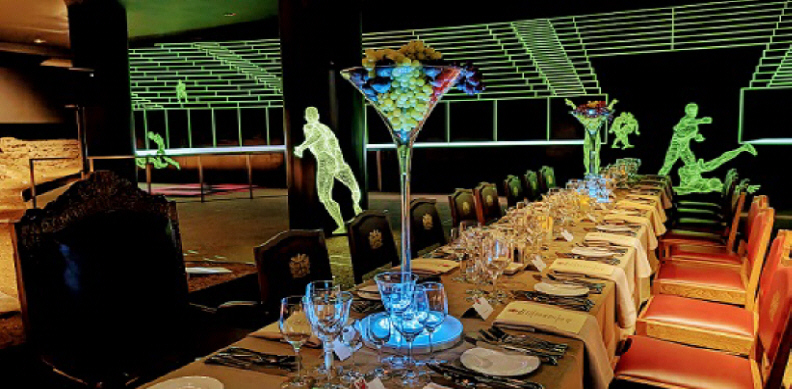
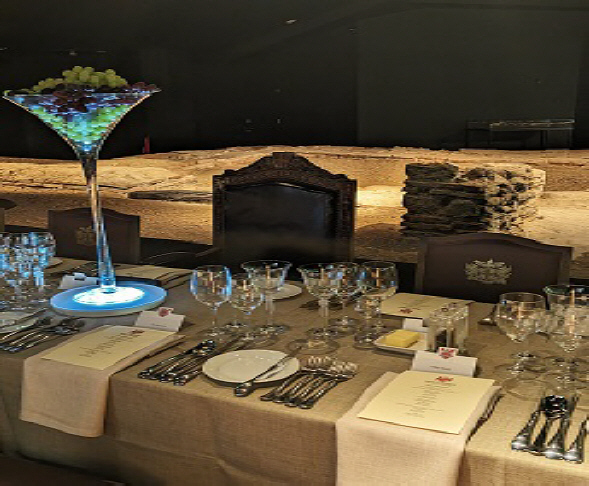

The Thirteenth Annual Young Pattenmakers' Dinner
17Th November 2023, Watermens' Hall, London
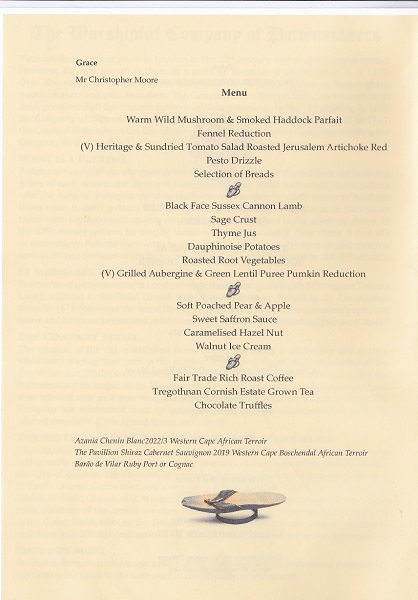
Masters & Clerks Luncheon
9Th November 2023, Cutlers' Hall, London
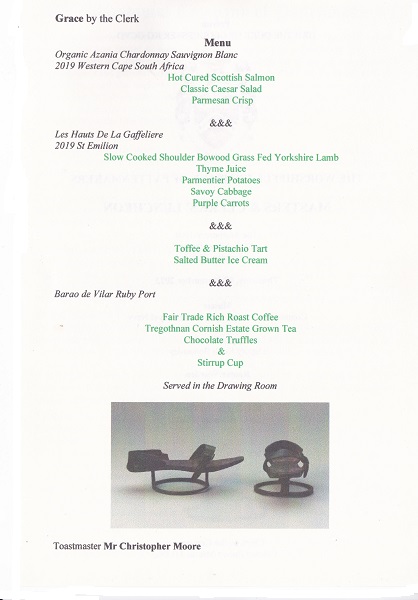
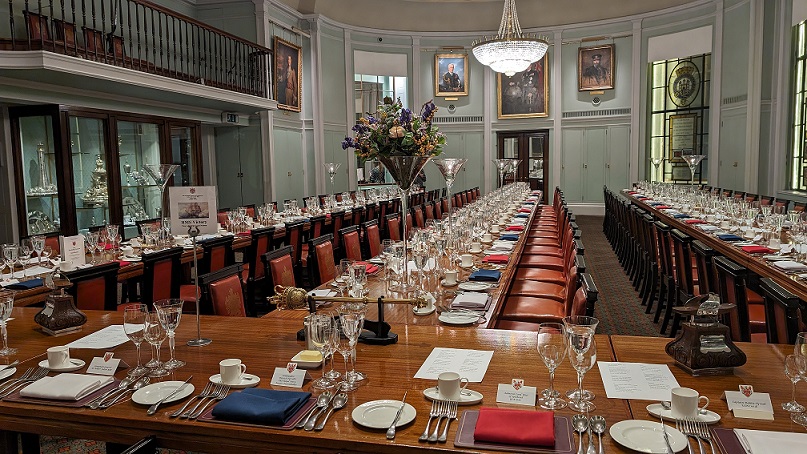
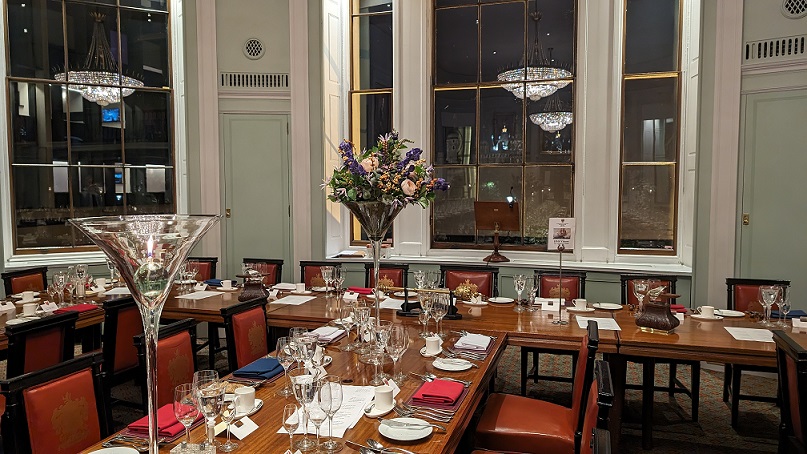
20th October 2023,Trinity House, London
|
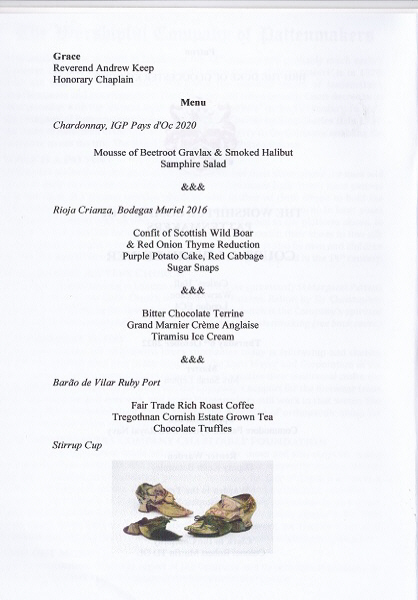
Menu Grace by the Beadle Mr Christopher Moore Sauvignon Blanc Reserva, Bio-Bio 2022 Gracia de Chile  Leviathan's Prize from the Deep Symphonie of Seafood Monkish Cod Salmon, Halibut King Prawns Saffron Sauce, Oatmeal Bread Cabernet Sauvignon 2019/20, Castelli Estate Western Australia  Fighting Temeraire Barron of Prime Norfolk Beef Nelson Gravy Yorkshire Pudding Horseradish Relish Dauphinoise Potatoes, Savoy Cabbage Roasted Shallots and Donkey Baby Carrots Lady Hamilton’s Delight Rich Caribbean Chocolate Mousse Port Baroa de Vilar Pussers Rum Blue Label “The Admiralty” Rich Roast Coffee |
Toasts THE KING Proposed by the Master Commodore Patrick Tyrrell OBE Royal Navy THE QUEEN, THE PRINCE AND PRINCESS OF WALES, OUR PATRON THE DUKE OF GLOUCESTER and other Members of the Royal Family Proposed by the Master THE LORD MAYOR AND THE CORPORATION OF THE CITY OF LONDON Proposed by the Master Liveryman Ian Balcombe will propose the toast to THE GUESTS Admiral The Lord West of Spithead GCB DSO will propose the toast to THE IMMORTAL MEMORY OF ADMIRAL LORD NELSON 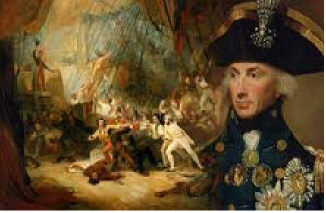 Reply from The Master Pattenmaker Commodore Patrick Tyrrell OBE Royal Navy Lieutenant General Sir Robert Fulton KBE will propose the toast to THE PATTENMAKERS’ COMPANY |
|
The Battle of Trafalgar The Battle of Trafalgar took place on 21 October 1805 between the Royal Navy and the combined fleets of the French and Spanish Navies. Nelson was outnumbered, with 27 British ships of the line against 33 enemy ships. To address this imbalance, Nelson sailed his fleet directly at the enemy’s battle line's flank, hoping to break the line into pieces. The plan worked almost perfectly; Nelson's columns split the Franco-Spanish fleet in three. In the ensuing fierce battle 22 allied ships were lost, while the British lost none. 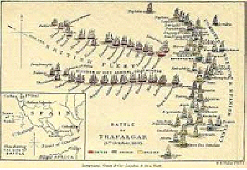 Nelson was shot by a French musketeer during the battle, and died shortly before it ended. The victory confirmed the naval supremacy Britain had established during the course of the eighteenth century. 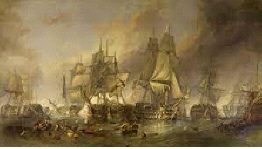
|
Patron HRH THE DUKE OF GLOUCESTER KG GCVO  THE WORSHIPFUL COMPANY OF PATTENMAKERS TRAFALGAR & LIVERY DINNER Trinity House Tower Hill London EC3N 4DH Friday, 20th October 2023 Master Commodore Patrick Tyrrell OBE Royal Navy Upper Warden Deputy Keith Bottomley Warden to the Trade Dr Christopher Stears  Clerk to the Company Colonel Robert Murfin TD DL |
Court & Livery Dinner
October 6th 2022, Cutlers' Hall, London
Court & Livery Dinner
March 2016, Cutlers' Hall, London
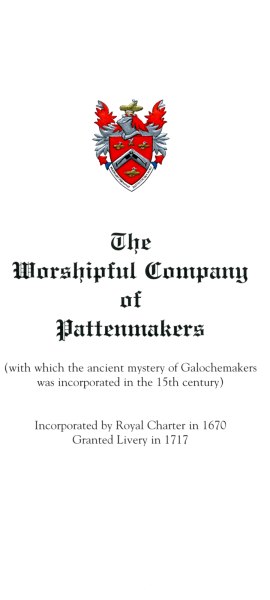
Pattenmakers were at work in London in the 12th century and probably much earlier. However, the first record of them as a guild or 'mysterie of patynmakers' is in 1379. Over the years the Pattenmakers integrated the separate trades of tassemakers, pouchemakers and galochemakers. The Company still refers by early Court decree to its incorporation with the ’ancient mysterie of Galochemakers' in the 15th century. In 1670 the Company of Pattenmakers was granted a Royal Charter by King Charles II. In 1717, the Court of Aldermen of the City of London granted livery to the Company, enabling the Company to use the title The Worshipful Company of Pattenmakers.
WHAT IS A PATTEN?
Pattens are undershoes designed to lift the wearers and their shoes above the mud and grime of early streets and dirty wet floors indoors. Most pattens take the form of a shaped wooden platform with leather or cloth straps to hold the shoes upon it. Early pattens had wooden wedges beneath the platform. In later years these were replaced with an iron ring and uprights attached to the platform above. In the 18“ century pattens for elegant ladies were made to match their shoes in fine silk or embroidery. Pattens were worn principally by women, but also by men and children until in Britain surfaces of roads, pavements and drainage improved in the 19“ century.
ST MARGARET PATTENS CHURCH
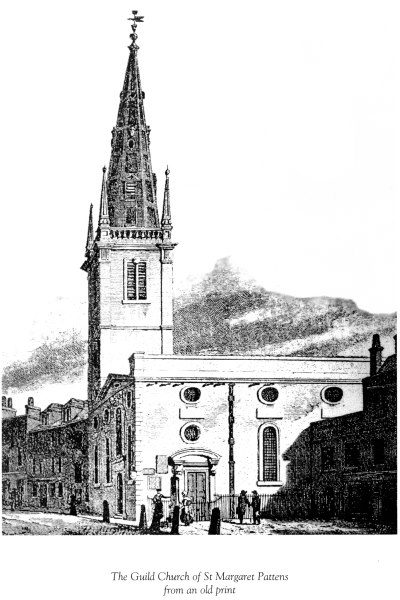
The centre of pattenmaking in London was in Rood Lane (previously St Margaret Pattens Lane), adjacent to the Guild Church of St Margaret Pattens. Rebuilt by Sir Christopher Wren in 1676 following the Great Fire of London, the church is the Company's spiritual home and houses a permanent exhibition of pattens and pattenmaking.
THE COMPANY TODAY
The mission of the old established livery companies today is fellowship and charity, whilst also playing their part in the support of the Lord Mayor and Corporation of the City of London. Whilst some of these companies still practise their traditional crafts, the Pattenmakers no longer do so. However, the Company's support for the footwear trade is as relevant now as it ever was, and many Pattenmakers still work in that sector. The Company has reinvented itself by supporting the provision of orthopaedic shoes for injured members of the armed forces and others.
THE PATTENMAKERS COMPANY CHARITABLE FOUNDATION
The Charitable Foundation funds bespoke orthopaedic shoes and also supports young orthopaedic shoe designers and podiatry students in their university studies. Within the City of London, the Foundation provides bursaries for City of London Schools, a St Paul's Cathedral chorister, and many other City of London institutions, including of course its Guild Church of St Margaret Pattens. It has military affiliations in each of the main divisions of the armed services, including support for young people in the Kent Army Cadet Force. Gifts to the Foundation to sustain its work are warmly welcomed and these and Gift Aid declarations can be made easily at wwwvirginmoneygiving.com.
Dinner
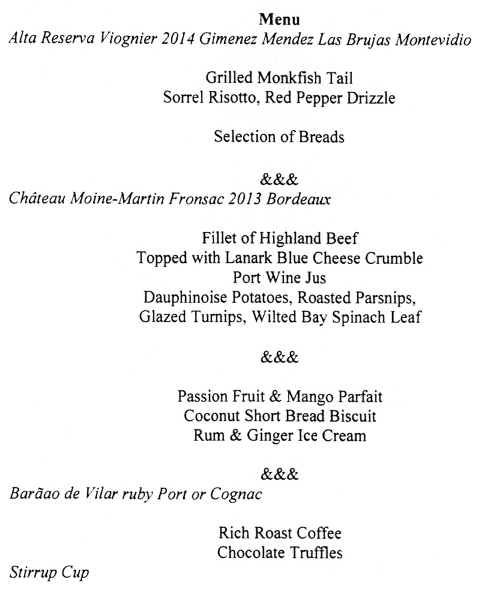
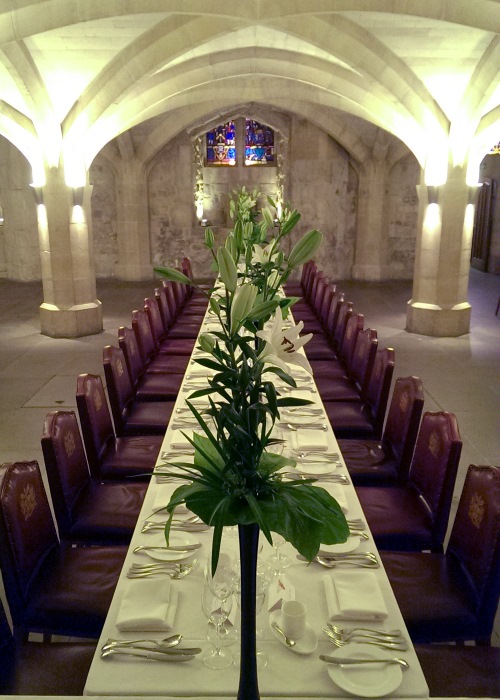
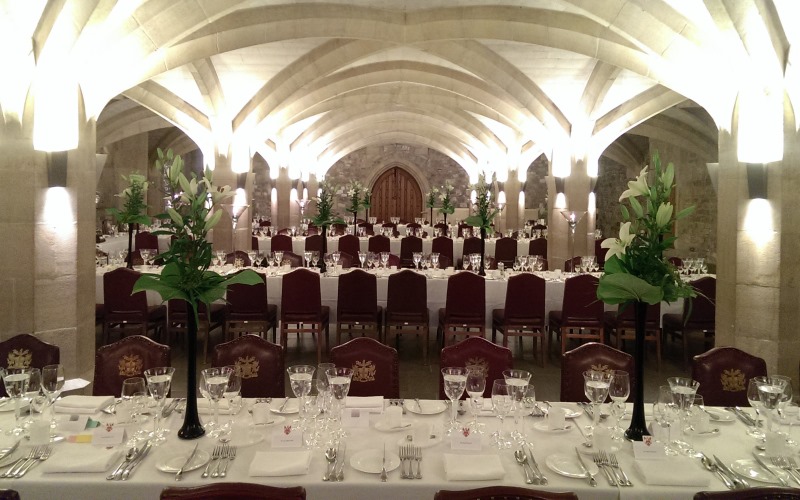
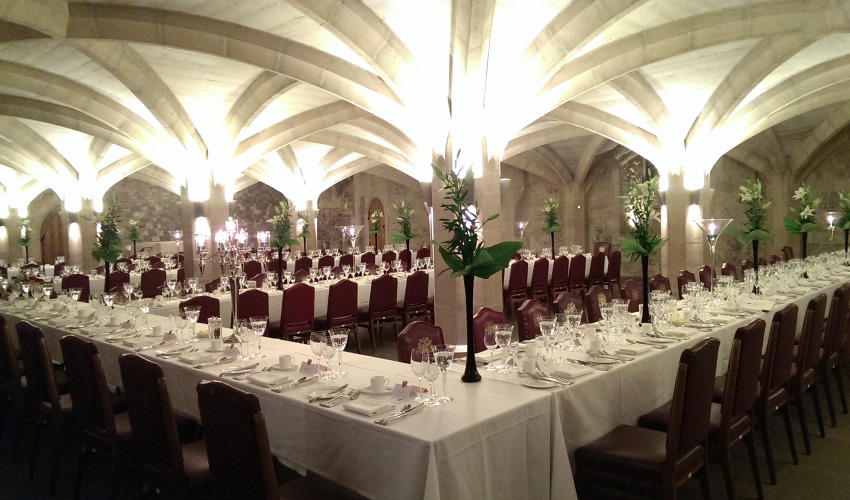
October 2015, The Crypt, Guildhall, London
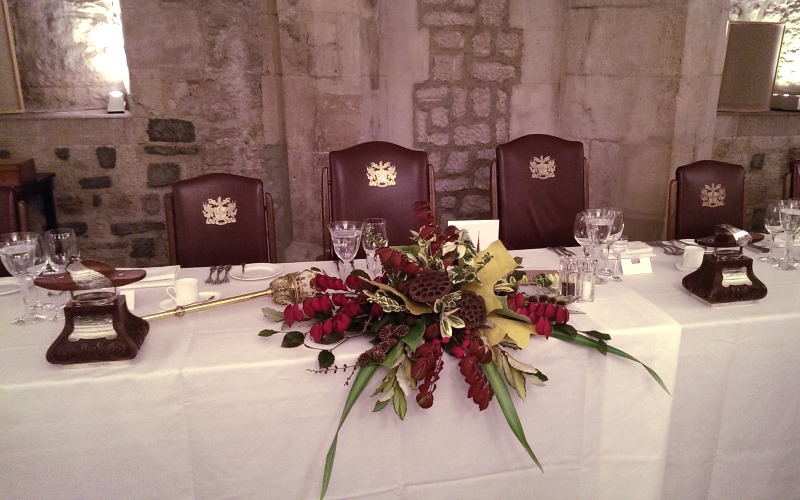
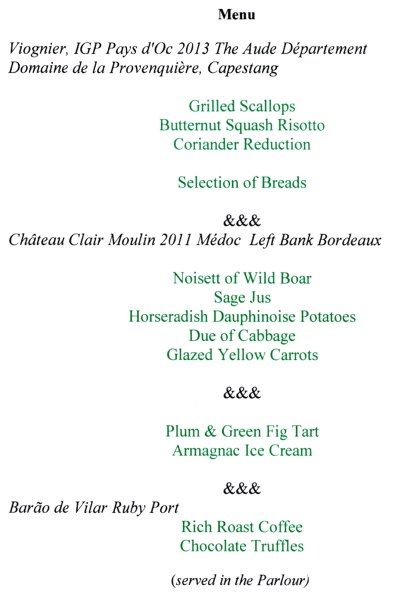
Masters & Clerks' Luncheon
November 2014, Girdlers' Hall, London
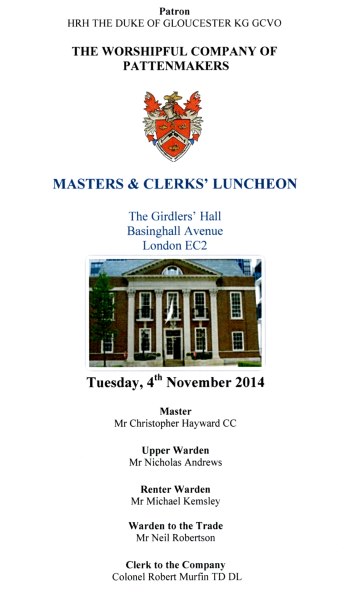
THE GIRDLERS' HALL
The Company, which was involved with the making of girdles
(or belts), received its Letters Patent from Edward III in 1327. While it no
longer practices its craft - although it has the honour of presenting the
girdle and stole worn by the Sovereign at each coronation.
In 1431 Andrew Hunt bequeathed the Company buildings and land which are
substantially the site of the present Hall. Hunt's buildings became the
Company's Hall, which was developed and improved over the years. In common
with many other livery halls, this building was destroyed in the Great Fire
of 1666. The replacement, built in 1681 at a cost of some £1,500, was
destroyed by enemy action in 1940, and rebuilt in 1961.
In 2006, the Company decided to refurbish the Hall and to add a further
floor. Work on this project started straight after Election Day 2007 and was
completed in May 2008.
Court & Livery Dinner
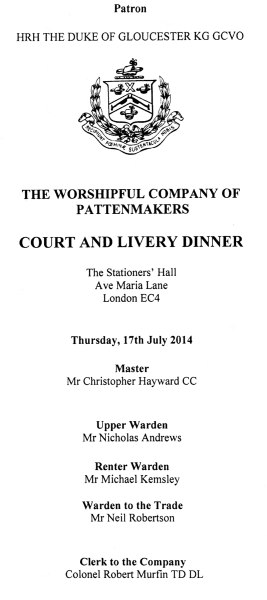
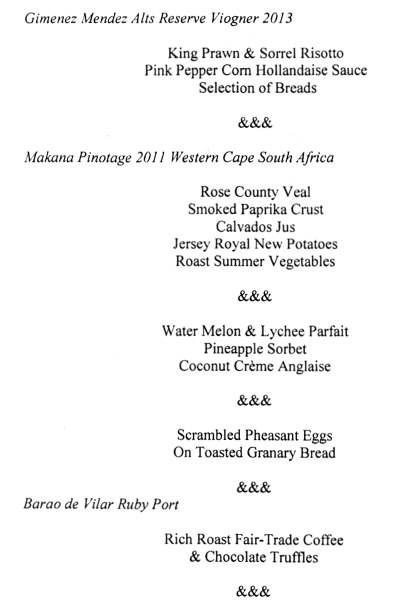
July 2014, Stationers' Hall, London
Court & Stewards' Dinner
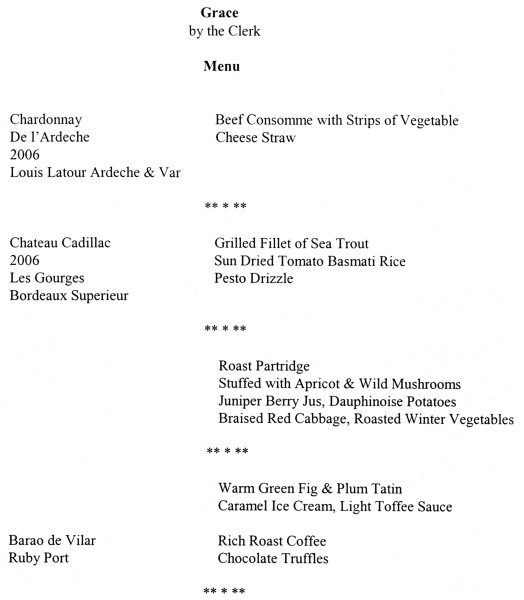
January 2012, Brewers' Hall, London

The Eleventh Annual Footwear
Dinner
March 2011, Carpenters' Hall, London


It is not possible to trace the origin of this Company but
there is no doubt that it existed as an unincorporated fellowship at a very
remote period. The trade of Pattenmaking was at one time a thriving industry
in the City of London, and, according to Stow, in his “Survey of the Cities
of London and Westminster”, was probably carried on in what now is Rood
Lane, but which was formerly known as St. Margaret Pattens Lane, in which
the church, known to this day as St. Margaret Pattens, still stands.
The mystery of “Patynmakers” was first mentioned in the City records in the
year 1379. Shortly after this period the mystery was combined with those of the Pouchemakers and
Galochemakers.
In the year 1517 the Pouchemakers were authorised by the Court of Aldermen
to unite and be translated into the Leathersellers’ Company, and since that
date the mysteries of the Galochemakers and Patynmakers have been combined
as a separate body under the title of Pattenmakers.
The Company was incorporated by Charles II on August 2nd, 1670. The charter associated all persons using the
art or mystery of making Pattens or Clogs within the cities of London and
Westminster, and ten miles every way distant therefrom, as the Master,
Wardens, Assistants and Fellowship of the Company of Pattenmakers of the
City of London, with power to make bye-laws for the government of its
members, and for the regulation of the trade, and to impose fines for
offenses against such bye-laws.
The Court of Aldermen, by an order dated 1674, decreed that all persons
using the trade of Pattenmakers were to he admitted to the freedom of the
City of London.
The Company was granted Livery by the Court of Aldermen on the 26th March 1717.
Owing to the improved paving of the streets the wearing of pattens in
London became less customary and the trade gradually fell into desuetude. While the
charitable and social functions of the Company have continued in full
operation, the powers conferred by Charter have not been exercised since the
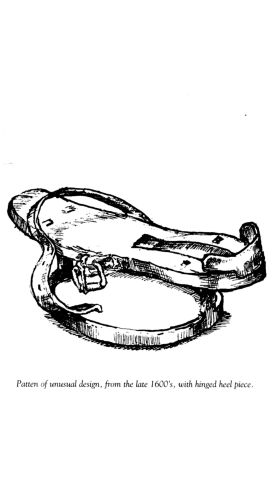
early part of the 19th Century. A sketch of a patten is shown on the inside
rear cover of this menu. (web note - see above)
The recent history of the Company has been one of expansion in numbers
authorised through a supplemental Charter, together with a much closer
association with the shoe trade. Its charitable activities have also greatly
expanded and include support for young managers in the footwear industry,
the armed forces, orthopaedic footwear, bursaries and grants to universities
and schools and support to the mayoralty and civic life of the City of
London.